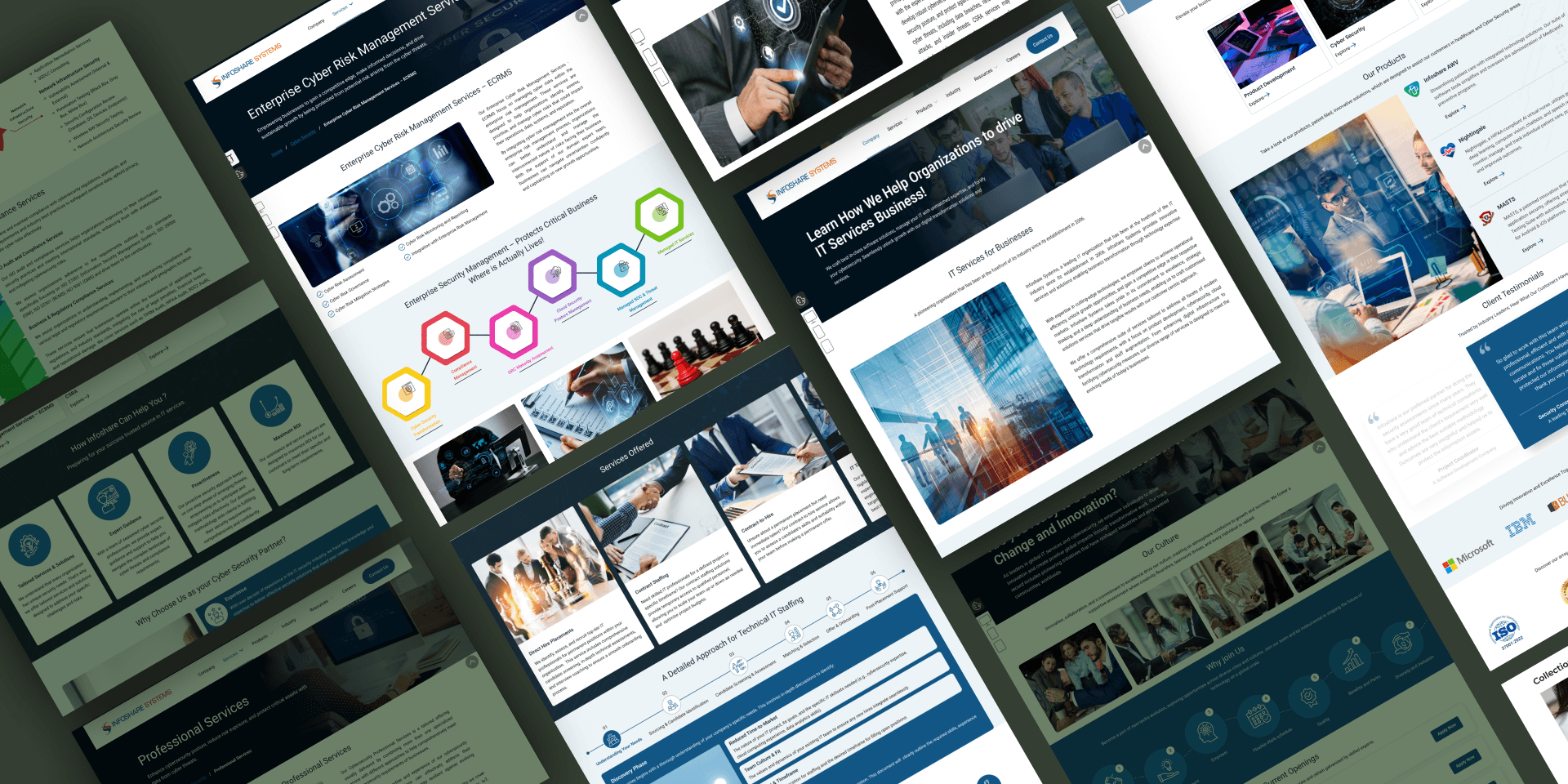
Scroll down to discover the engaging UI/UX design elements crafted for this project.
Scroll Down
At a Glance
I worked as a senior designer and front-end developer on website redesigns for Infoshare Systems. My role was to improve the user experience for both individual customers and business users. I used various techniques, such as discussions, sketches, wireframes, prototypes, and testing, to design the app. In 4 months, I successfully designed and developed a website, created a detailed design system, and collaborated with developers to implement the design.
Timeline
4 Months
My Role
Collaboration
Marketing Team
Content Writer
Management Team
Development Team
Business Team
Graphic Team
Platform
Figma
FigJam
Photoshop
Illustrator
HTML
The project is an ongoing effort that commenced in January 2024. I worked at Infoshare for this project for 4 months (Jan 2024–April 2024), during which I conducted user research and built a sitemap for the entire website, along with wireframes for 15-20 pages.
What does Infoshare do?
Infoshare Systems is a leading IT organization that has been at the forefront of the IT industry since its establishment in 2006. Infoshare Systems provides innovative services and solutions, enabling business transformation through technology expertise.
Why is a company website important?
A business's online presence, regardless of industry, can have a massive impact on its success. According to an article published by Forbes, one of the main reasons you should have a website for your business is to increase your organization's credibility. There are service providers offering a similar service to yours. One way you can stand out is by having a website that looks good and clearly communicates quality information to your consumers.
Brief
Infoshare has an up-and-running website with approximately 20 pages. The navigation bar allows the user to choose and redirect to a desired page. The decision to redesign was based on a need to align the website with the company as an established business.
Design Process
The project needed extensive research to understand the different kinds of users, competitive audits, and what users want to see on a company's website.
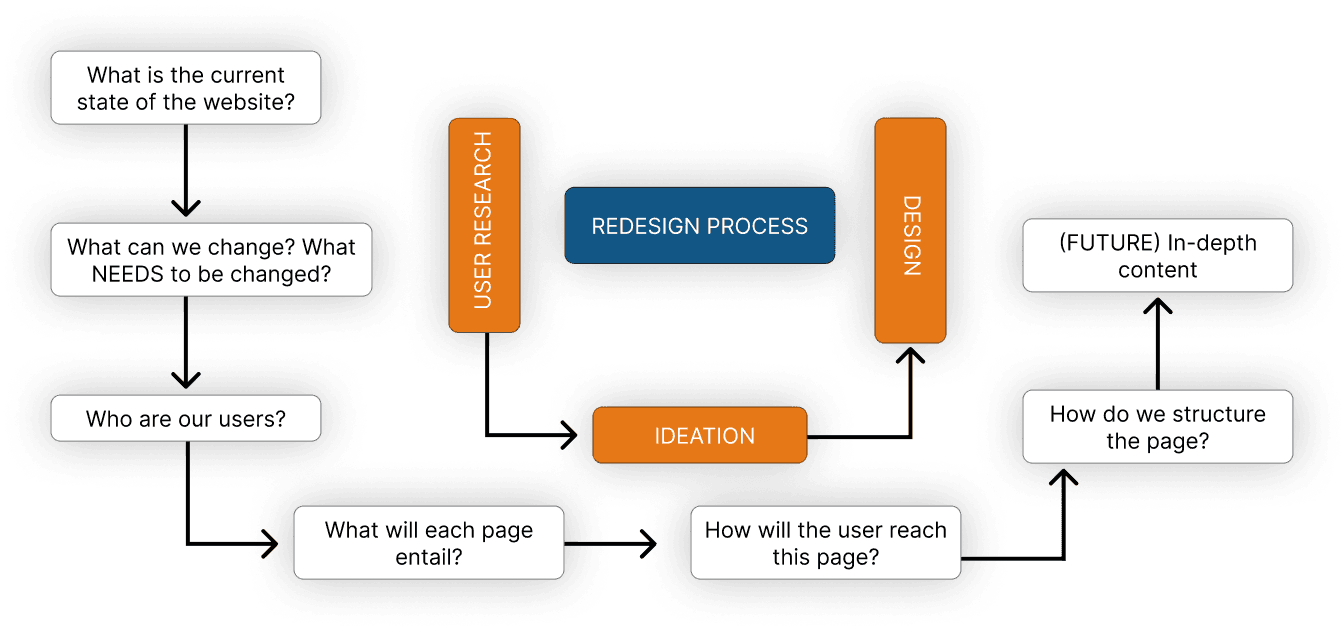
I conducted extensive research to assess the current state of the website. This process allowed me to question the need for certain sections or data presented on the website. It was important to retain certain data and omit the rest, which was finalized and discussed with senior executives, who interacted with various site users in the real world.
Project Goals
Enhance User Navigation and Accessibility
Improve Mobile Responsiveness
Optimize Page Load Speed
Enhance Visual Appeal and Consistency
Boost User Engagement and Interaction
Project Constraints
Time Constraints
Resource Availability
Technical Limitations
Stakeholder Requirements
Budget Limitations
Project Assumptions
Availability of Key Stakeholders
Access to Existing Content and Data
Adequate Team Skills and Experience
User Acceptance and Adoption
Stable Internet and Hosting Environment
Success Criteria
Improved User Experience and Satisfaction
Increased User Engagement and Interaction
Enhanced Mobile Responsiveness and Performance
Achieved Accessibility and Compliance Standards
Deliverables
Project Plan and Timeline
Wireframes and Prototypes
Design Mockups and Style Guide
Developed and Tested Website
Launch and Post-Launch Support Plan
Project Phases
Discovery and Planning Phase
Research and Analysis Phase
Design Phase
Development Phase
Testing and Quality Assurance Phase.
Launch Phase
Post-Launch Support and Optimization Phase
Primary Research
This phase allowed me to create a strong foundation for my design strategy. Each decision made in the following months was backed by data collected during this phase.
Since the company and its leadership knew what they wished to present, I adopted secondary research methodologies. This included a competitive research audit, a number of collaborative calls with senior executives, and thorough research to understand different user profiles. Another important aspect that was discussed was cleaning up the information architecture.

Emily Carter
Female
40 years
Business Owner, CEO of a Software Company
Master's Degree in Computer Science
Austin, Texas, USA
Highly proficient with advanced software tools and platforms
Bio
Emily Carter is a 40-year-old entrepreneur based in Austin, Texas. She holds a Master's Degree in Computer Science and is the founder and CEO of a successful software company specializing in innovative healthcare solutions and cybersecurity services. With an income of $150,000 per year, Emily is a highly skilled professional who is proficient with advanced software tools and platforms.
Quote
Clients need to easily understand the value our products and services bring to their businesses.
Goals
Enhance online presence and visibility of company products and services
Attract new clients and business partnerships
Showcase the technical expertise and success stories of the company
Provide comprehensive information about products and services
Needs
Modern and user-friendly website design
Detailed and accessible information about each product and service
Showcasing of case studies, client testimonials, and success stories
Improved lead generation and contact options
Behavior
Regularly reviews industry trends and competitor websites
Participates in tech conferences and networking events
Engages with industry thought leaders and follows relevant blogs and forums
Frustration
Outdated website design and difficult navigation
Lack of clear and detailed information about products and services
Incomplete online representation of the company’s expertise and achievements
Limited engagement and interaction features on the website
Motivations
Establish the company as a leader in healthcare and cyber security software
Drive business growth and expand market reach
Provide innovative solutions to clients and improve patient care through technology
Preferred Platforms
Desktop for detailed content creation and management
Mobile and tablet for quick updates and on-the-go access
Key Features Desired
Clear and comprehensive product and service descriptions
Modern, responsive design with intuitive navigation
High-quality case studies, client testimonials, and success stories
Interactive elements such as live chat, contact forms, and downloadable resources
Secure access to sensitive information and resources for clients
Ideation
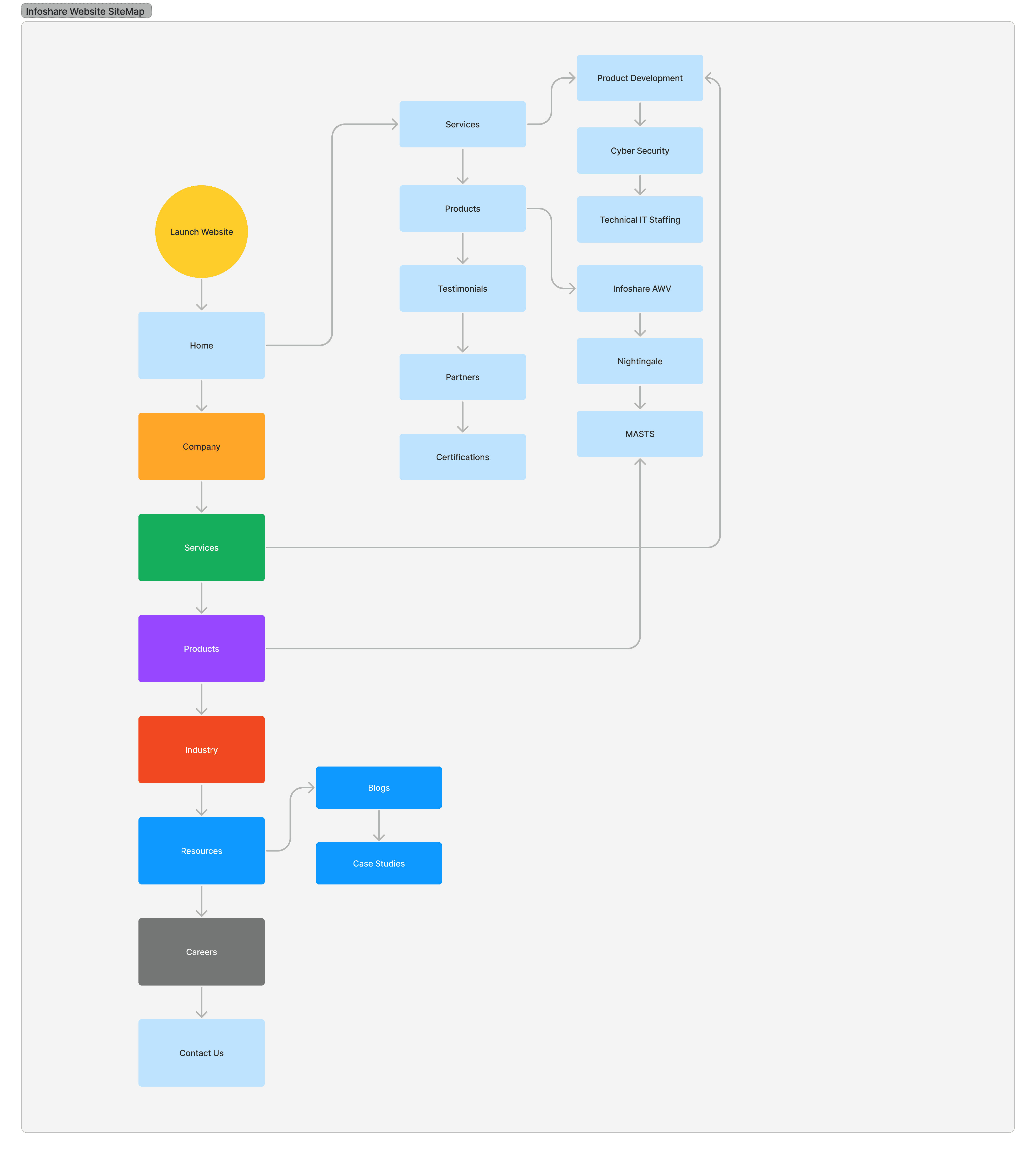
With the information collected and analyzed during phase 1, the next step was to build out a site map. A sitemap lists a website's most important pages, thus making sure search engines can find and crawl them. Sitemaps also help in understanding our website structure, making it easier for the user to navigate through our website. While the former allows for better SEO performance, the latter provides a better user experience.
The site map was designed to list the different types of pages, as well as the content present on each page. Then Corss referenced it with each user persona to understand if the pain points were addressed correctly. This iteration facilitated improving the structure of each page, making the design more intuitive.
User Flow
I used information architecture to plan how Ashish would navigate through the Visaero Mobile app. There are two main paths: one for Ashish applying for a self visa and another for applying for a self visa along with visas for others.
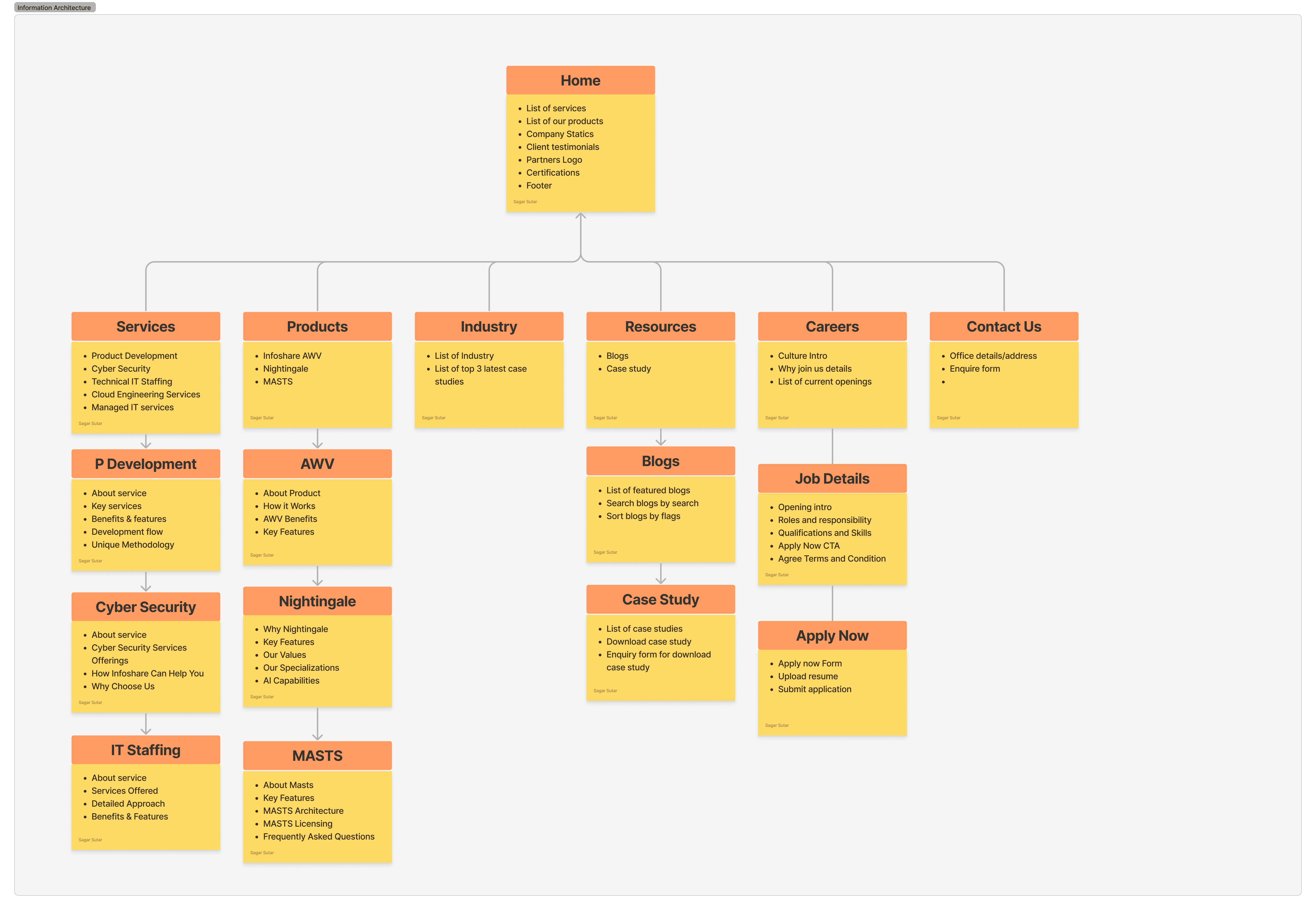
Information Architecture
We have defined the structure for users to navigate the app and access features to reach their goals.
From Paper to Digital
We discussed and fine-tuned each screen thoroughly, ensuring that every element was carefully placed and spaced according to its purpose.

Our Solution
Infoshare Systems
Infoshare Systems is a leading IT organization that has been at the forefront of the IT industry since its establishment in 2006. Infoshare Systems provides innovative services and solutions, enabling business transformation through technology expertise.
We understand that search for IT services can be a complex and time-consuming process. That's why we've developed a user-friendly and responsive website, so user can easily access the site from any device.

Design Systems
Basically, we followed Google Material design systems and created own design systems with our font family and color combination. Figma File

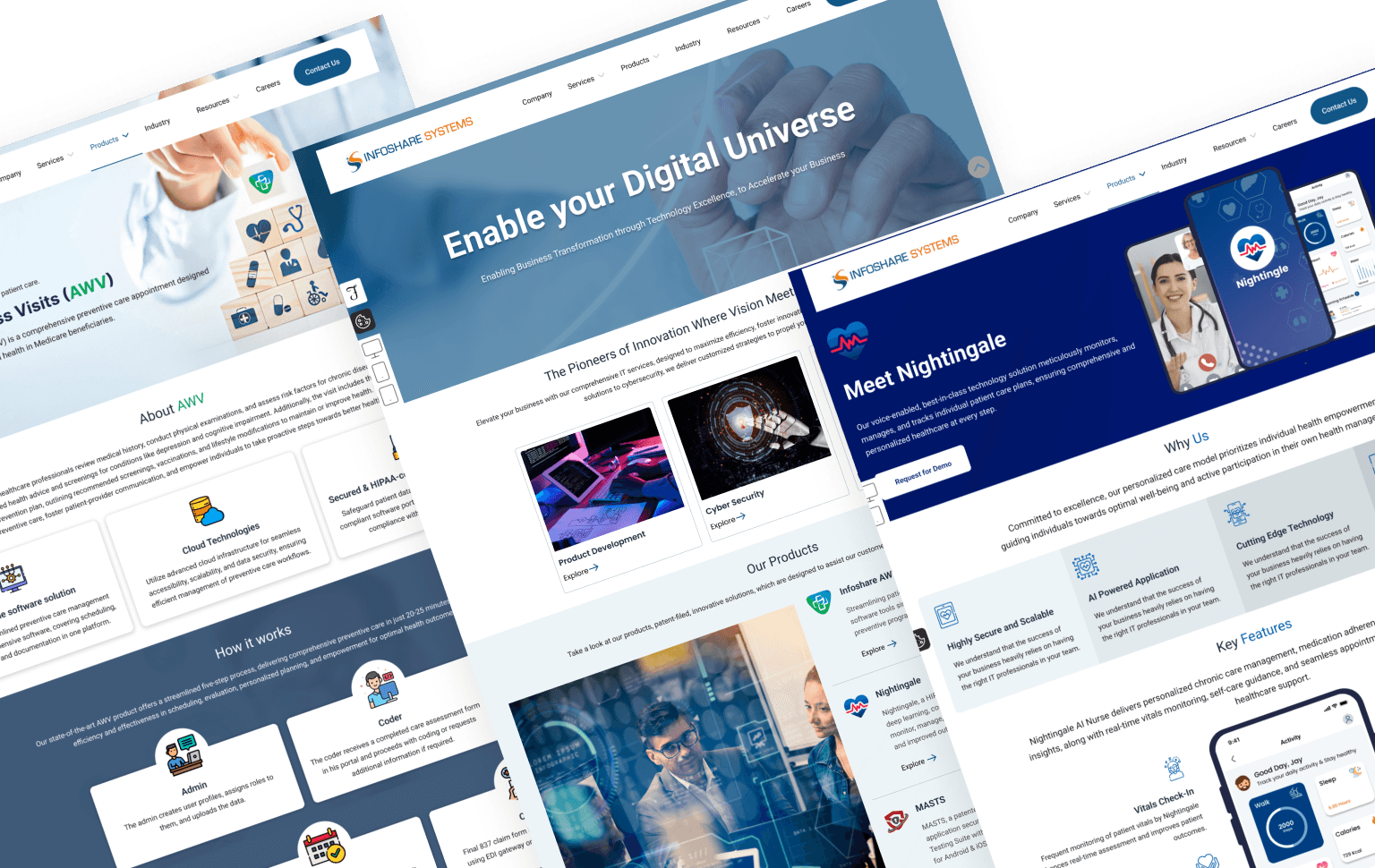
Desktop Mockups
Basically, we followed Bootstrap design guidelines and designed and developed website.
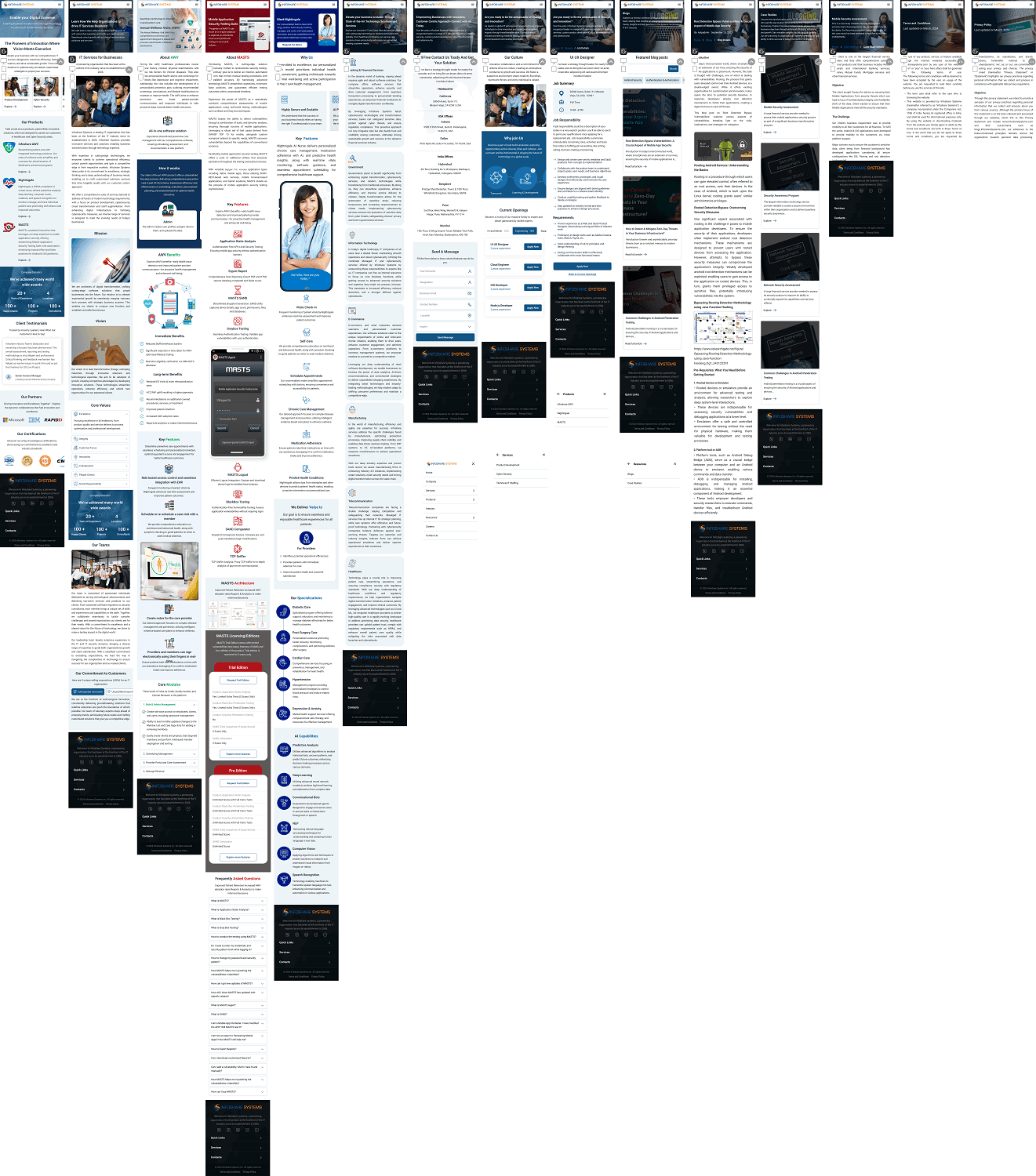
Mobile Device Mockups
What I learned
Designing and developing this website taught me the importance of user-centered design, emphasizing the need to prioritize end-users' needs and behaviors to create intuitive and effective solutions. Detailed planning and research, including stakeholder interviews and competitive analysis, proved essential for making informed design decisions. Effective communication and collaboration with stakeholders and team members ensured alignment and smooth project progression.
Implementing mobile-first and responsive design techniques was crucial for providing a seamless experience across all devices. Incorporating interactive features like live chat and interactive demos significantly enhanced user engagement and retention. Balancing aesthetics with usability ensured the website was both visually appealing and user-friendly.
© Sagar Sutar 2023
sagar.webxperts@gmail.com
+91 8007102187